

Views: 0 Author: Site Editor Publish Time: 2026-09-26 Origin: Site


Switching industrial consumables carries high operational risks. Production lines rely heavily on process consistency. Poor-quality abrasive belts lead to sudden machine downtime. They cause inconsistent surface finishes and inflate your daily scrap rates. Evaluating a potential metal polishing material manufacturer requires looking far beyond unit price. The ultimate goal is identifying a long-term partner.
You need someone capable of delivering predictable yield. Technical alignment and reliable supply chains also matter greatly. This article provides procurement managers and production engineers a rigorous questioning framework. You will learn exactly how to vet suppliers thoroughly before signing bulk contracts. Using this structured approach protects your production quotas and ensures higher quality output.
Quality validation: Prioritize manufacturers who can prove batch-to-batch consistency through documented statistical process control.
Risk mitigation: Always demand small-scale R&D trials to validate belt performance on your specific alloys and contact wheels.
Application specificity: Look for comprehensive custom capabilities, from specialized joint types to niche materials like nylon surface conditioning.
Total Cost of Ownership (TCO): Evaluate high-efficiency claims based on cost-per-part reduction and abrasive lifespan, not just the upfront belt cost.
Evaluating the quality control maturity of a supplier is critical. You want to prevent unexpected production halts at all costs. Consistent abrasive belts keep automated grinding cells running smoothly. You should ask probing questions about raw material sourcing. Traceability of the abrasive grain is non-negotiable for demanding applications. Whether you use aluminum oxide, zirconia, or ceramic, origins matter. High-quality minerals fracture predictably during heavy grinding. Backing materials require equal scrutiny. Weak cloth backings stretch under high tension. This stretching causes immediate tracking issues on your machine.
Ask about their manufacturing tolerances. Acceptable variance in belt thickness directly impacts surface finish. Even a millimeter of variation causes visible chatter marks on flat parts. Joint integrity determines operational safety. A snapped belt endangers operators. It also damages expensive workpieces instantly. Ask suppliers how they maintain stable quality during continuous production runs.
Request specific evidence of their quality systems. ISO 9001 certifications provide a solid baseline. You should also demand batch testing protocols. Real-time defect monitoring data proves they catch errors early. Modern laser scanning detects thickness anomalies before shipping. Watch out for glaring red flags. Vague claims about strict inspections mean very little in industrial procurement. Quantifiable metrics indicate true manufacturing maturity. Demand to see tensile strength tests on belt joints. Ask for statistical process control charts from recent production runs.
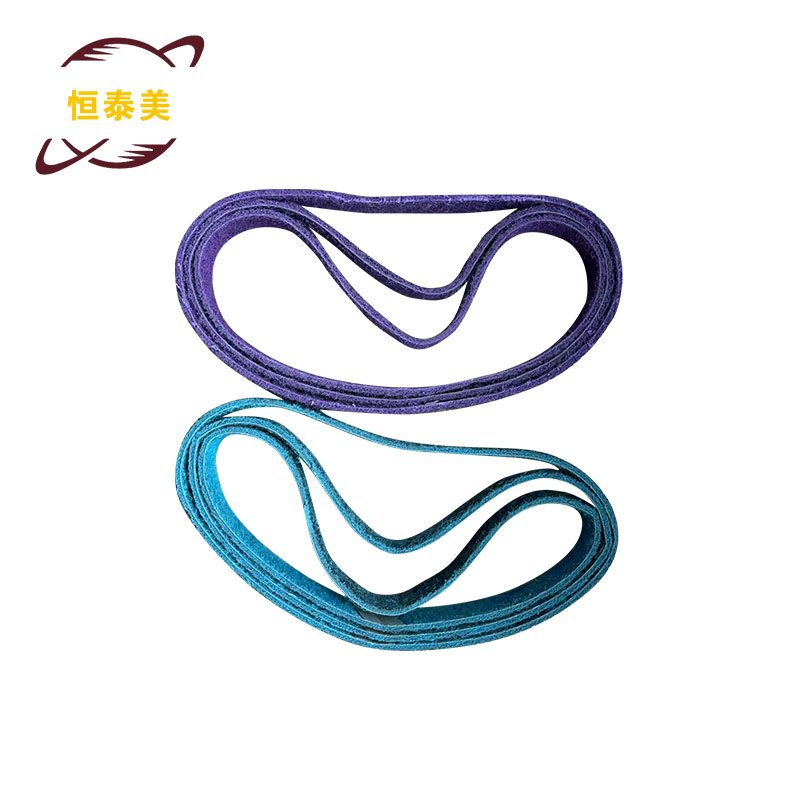
Off-the-shelf products cannot solve every manufacturing challenge. You must determine if a supplier adapts to unique specifications. Unusual contact wheels often require modified belt designs. Harder durometer wheels need highly flexible backing materials. Proprietary metal finishes demand specialized abrasive formulas. First, confirm their dimension flexibility. Ask about their limits on custom widths. Specialized wide-belt sanding equipment often needs non-standard dimensions. Your partner must accommodate these variations seamlessly. They should offer precise slitting capabilities.
Next, discuss joint technology selection deeply. The wrong joint ruins a perfectly good belt. Ask how they match joint types to specific tension requirements. Directional grinding applications need careful joint pairing. A poorly taped seam will bump against the contact wheel. This bumping transfers directly onto your finished metal surface.
Abrasive Belt Joint Technologies Comparison
Joint Type | Key Characteristics | Best Application |
|---|---|---|
Tape Joint | Smooth running, zero thickness variation. | Fine finishing and fragile workpieces. |
Overlap Joint | Extremely strong, slight thickness bump. | Heavy stock removal and rough grinding. |
Butt Joint | Ends meet flush, joined by backing tape. | General purpose and bi-directional use. |
Niche material competence is another vital area. Some processes require extensive blending after heavy stock removal. Others need specialized surface conditioning to achieve a satin finish. Ask if they operate as a dedicated nylon sanding belt manufacturer. Many generic suppliers simply outsource these specific surface conditioning products. In-house manufacturing guarantees better quality control. It also ensures consistent non-woven nylon density. Finally, define the expected turnaround time clearly. Securing a clear service level agreement is essential. You need firm deadlines for engineering a custom abrasive belt prototype.
Structured prototyping de-risks the onboarding process significantly. You should never shift your entire production line blindly. Operational testing reveals hidden flaws early in the relationship. You must ask exactly how they structure small-scale R&D trials. Do they provide a comprehensive matrix of grits? You need various backing types to test against baseline metrics. A proper trial isolates one variable at a time. This scientific approach prevents skewed performance data.
Engineering support plays a crucial role here. Find out if they send field engineers to your facility. Virtual technical support also adds immense value if on-site visits are impossible. These experts help optimize complex machine parameters. Adjusting contact wheel speed and grinding pressure during the trial ensures accurate results. They can monitor the amperage draw of your grinding motors. Lower amperage indicates a sharper, more efficient cut.
Clarifying the transition to scale matters immensely. Moving from a small test to mass production introduces dangerous variables. The manufacturing transition usually follows several structured steps:
Establishing baseline production metrics using your current standard abrasives.
Testing a small batch of 50 new belts under strictly controlled conditions.
Optimizing contact wheel pressure and operating speeds based on initial wear patterns.
Scaling up to a 5,000-belt monthly order while actively monitoring batch consistency.
Following this structured path prevents unexpected drops in quality. It protects your daily production quotas from sudden failures.
You must shift the conversation away from generic marketing claims. Demand quantifiable performance outcomes instead. Material Removal Rate stands out as a primary metric. Ask for comparative case studies from similar industries. You want to see their belt's cut rate over time. Compare these numbers against known industry standards. A truly superior belt maintains a high cut rate even as it wears down.
Thermal management requires special attention. Heat-sensitive metals like stainless steel pose unique challenges. Titanium requires even stricter temperature controls during grinding. Inquire about specific grinding aids used during manufacturing. Ask about top-size coatings designed to reduce heat friction. These chemical additions prevent severe workpiece discoloration. They stop heat from warping thin metal sheets. They also stop the abrasive grains from capping or dulling prematurely.
Look for specific high-performance indicators in their product lines:
Consistent micro-inch finish readings across the entire lifespan of the belt.
Top-size cooling agents that actively lubricate the harsh cutting zone.
Self-sharpening ceramic grains that fracture evenly under heavy pressure.
Anti-static treatments that prevent swarf buildup on the abrasive surface.
Request hard data on product longevity. Find out how a high efficiency abrasive belt lowers your actual cost-per-part. Reducing changeout frequency saves significant money over a fiscal year. Less operator downtime translates directly into higher daily throughput. Base your final procurement decisions on these verifiable cost reductions. Avoid focusing solely on the initial purchase price of the consumable.
Auditing commercial reliability is just as important as technical validation. A great product means nothing if it arrives late. You must evaluate their inventory management and logistics infrastructure. Lead times dictate your production scheduling. Ask if they offer vendor-managed inventory programs. Blanket orders featuring scheduled releases prevent disastrous stockouts. A reliable abrasive belt supplier provides flexible delivery options. They should hold safety stock for your most critical part numbers.
Minimum Order Quantities require careful clarification. Standard products usually carry lower volume requirements. Custom dimensions often demand much larger commitments from buyers. Ensure these numbers align closely with your natural purchasing cycle. You do not want cash tied up in excess inventory.
Storage and shelf life deeply affect product performance. You should inquire about their warehousing facilities. Climate-controlled storage remains crucial for specific products. Resin bonds degrade rapidly in high humidity environments. Tape joints fail prematurely if exposed to extreme temperature swings. Shipping protections must shield the belts from moisture during ocean or rail transit. Ask how they package bulk orders to prevent edge damage during shipping.
A reliable supplier acts as a true extension of your production engineering team. They are never just a transactional vendor pushing boxes. Evaluating them requires a highly strategic approach. You must weigh technical support heavily during the selection process. Batch consistency often matters far more than initial pricing. Cheap belts quickly become expensive if they halt your automated lines. Focus on verifiable data, structured trials, and clear communication.
Start your formal vetting process today. Initiate a detailed technical consultation with potential partners. Send them a comprehensive audit questionnaire based on these five pillars. Finally, order a trial sample pack to test their claims on your own factory floor. Taking these proactive steps ensures a profitable and stable manufacturing operation.
A: Standard industry timelines usually range from two to four weeks. This timeframe depends heavily on backing material availability. The complexity of the required joint also impacts production speed. Highly specialized surface conditioning belts may require additional lead time for custom splicing.
A: You should maintain a strict temperature range of 60-70°F. Humidity must stay controlled between 40-50%. These exact conditions maintain joint integrity over time. Proper climate control prevents the backing material from cupping or curling before installation.
A: Incorrect joint selection for the specific application is a common culprit. Improper machine tension also stresses the seam unnecessarily. Sometimes, the manufacturer fails to use high-grade splicing tape. Bi-directional grinding requires specific butt joints to prevent sudden snapping.
A: Yes, you can usually request free generic samples for visual checks. These allow you to inspect basic joint quality and grain distribution. However, paid R&D trials offer structured, high-volume testing. These formal trials are tailored specifically to your unique operational environments.


