

Views: 0 Author: Site Editor Publish Time: 2026-09-22 Origin: Site


Standard, off-the-shelf abrasives frequently fail to meet strict surface conditioning tolerances required in high-stakes industries. You might notice inconsistent finishes on critical components. Using incorrect belt specifications on alloys like titanium, aluminum, and stainless steel leads to premature abrasive wear. It also causes uneven finishes and unacceptable thermal damage. You must solve this issue to maintain production efficiency and meet quality standards. We provide a technical evaluation framework designed specifically for procurement and engineering teams. This guide helps you specify and source a custom nylon sanding belt. You will learn how to balance aggressive material removal rates with highly consistent surface finishing. We also explore structural frameworks, specialized grit selection, and complex geometry handling. By implementing these tailored solutions, you can optimize your entire metal processing workflow.
Application matching is critical: Success relies on precisely aligning nylon belt dimensions, web density, and mineral types with your specific machinery and alloy type.
Flexibility dictates performance: Curved surface grinding requires specific backing and joint types to prevent chatter marks and ensure even wear on complex geometries (e.g., turbine blades, marine propellers).
Supplier vetting mitigates risk: A reliable metal polishing material manufacturer will provide transparent data on batch-to-batch consistency, joint strength, and custom prototyping capabilities before full-scale rollouts.
Standard belts often suffer from loading or clogging during operations. Heavy-duty metal processing causes rapid glazing across the belt surface. Edge fraying also occurs frequently under lateral stress. These structural failures result in excessive machine downtime. You lose valuable production hours during constant belt changeovers. Operators spend more time troubleshooting machinery than finishing parts. This inefficiency demands a more robust, specialized solution.
We must evaluate specific success criteria before designing a customized solution. You should focus on three primary operational metrics:
Measurable ROI: Look for reduced consumable spend per polished unit. You want belts that last longer and perform better.
Process Stability: Aim for consistent Ra (roughness average) values. Every production batch must meet the exact same surface finish standards.
Operator Efficiency: Seek abrasives that require reduced manual pressure. This lowers dangerous thermal buildup. It also significantly reduces operator fatigue during long shifts.
Transitioning to a customized abrasive belt requires a strategic approach. You face an initial investment in prototype testing. Higher MOQs (Minimum Order Quantities) generally apply to bespoke manufacturing. Extended belt life easily offsets these initial requirements. Lower defect rates also justify the upfront investment. You ultimately gain a more predictable and profitable manufacturing process.
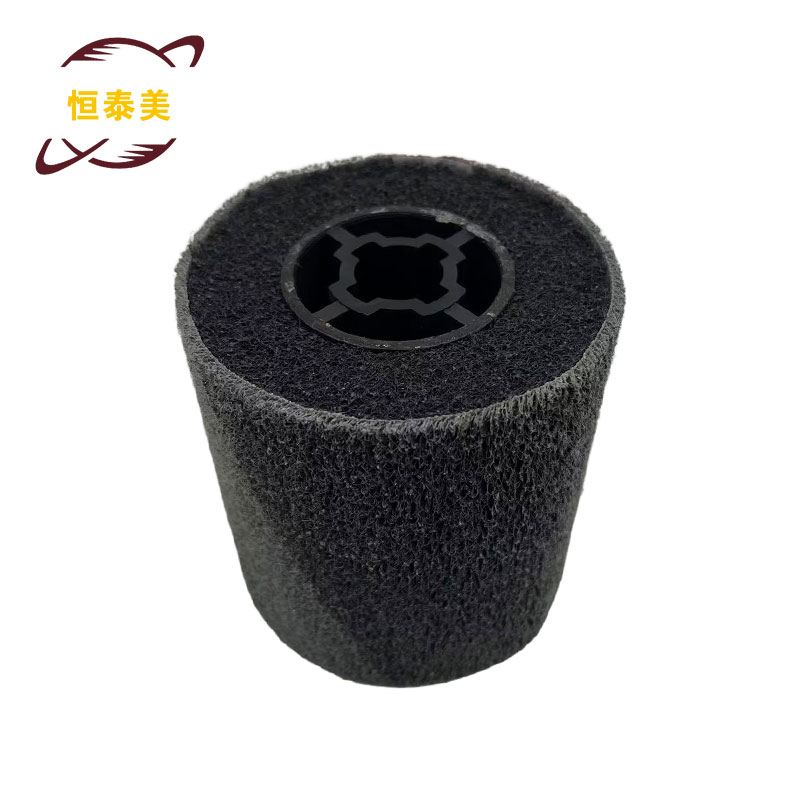
Custom manufacturing allows you to select non-standard widths and lengths. You can tailor them perfectly to specialized robotic cells. They also fit automated stroke sanders and proprietary handheld pneumatic tools. Specifying exact nylon belt dimensions improves automated machine tracking. It prevents the abrasive band from wandering off the contact wheel. This precision reduces edge wear and extends the usable life of your equipment.
Joint construction plays a massive role in finishing performance. You must choose the right splice for your specific application.
Tape Joints: Choose tape joints for sensitive aerospace components. They feature a smooth, seamless transition. This design prevents bump marks on delicate titanium or aluminum surfaces.
Overlap Joints: Overlap joints suit heavy-duty shipbuilding applications. They handle extreme tension and pressure well. Sheer strength matters much more here than microscopic finish perfection.
Common Mistake: Using an overlap joint on precision aero-engine parts. The slight bump causes chatter marks, leading to rejected parts.
You must thoroughly assess the non-woven nylon matrix. Check it for high tear resistance and overall flexibility. The matrix must withstand continuous exposure to industrial coolants. It should not degrade, swell, or soften under chemical exposure. A resilient backing maintains structural integrity even under high-torque grinding operations.
Standardized abrasive grading maps directly to your required surface finish. You must optimize the grit size carefully to achieve target Ra values.
Coarse/Medium: This range easily removes surface rust and heavy burrs. It effectively blends large weld seams in shipbuilding environments.
Fine/Very Fine: This range conditions final metal surfaces. It prepares aerospace parts perfectly for subsequent anodizing or protective coating.
Abrasive grain selection determines your cutting efficiency. Aluminum Oxide (A/O) suits high-tensile carbon steel materials. It offers a sharp, highly durable cut. Silicon Carbide (S/C) performs much better on titanium and non-ferrous metals. It provides a exceptionally clean finish. It also minimizes metallurgical contamination risks during processing.
Mineral Type | Ideal Target Materials | Primary Performance Advantages |
|---|---|---|
Aluminum Oxide (A/O) | Carbon steel, hard alloys, iron | Highly durable, sustained cutting power |
Silicon Carbide (S/C) | Titanium, aluminum, brass | Sharper initial cut, lower thermal transfer |
Demand hard performance data on grain shedding rates from your supplier. Inferior belts lose their abrasive coatings very early in production. The nylon web remains fully intact, but the cutting action fails completely. This forces premature replacements. Always request laboratory test data proving strong resin-to-grain adhesion.
Standard rigid belts fail spectacularly on sweeping curves. They bridge across concave surfaces without making proper contact. They also aggressively dig into convex curves. This unwanted friction destroys exact part geometry. You cannot risk these dimensional alterations on critical engineering components.
Customizing the web compressibility solves these geometric challenges. The customized belt naturally conforms to highly irregular profiles. This makes it absolutely essential for curved surface grinding. You need this flexibility for finishing marine propellers. Aerospace turbine blades and tubular steel frames require it too. The abrasive safely hugs the metal rather than gouging it.
Thermal risk mitigation remains a vital safety priority. Nylon materials can melt if pushed beyond safe thermal limits. The fibers smear onto the metal surface under extreme heat. Custom belts designed for curves must feature open-web construction. This design facilitates maximum airflow. It dissipates intense heat during high-friction continuous grinding operations.
Best Practice: Always adjust your surface feet per minute (SFPM) when grinding curves. Slower speeds prevent heat buildup and protect the nylon matrix.
You must rigorously evaluate scalability and production capacity. Can the supplier sustain tight dimensional tolerances? They must handle high-volume orders without fluctuating quality. Look for recognized ISO 9001 certifications. Review their documented quality assurance (QA) processes. Consistent manufacturing guarantees consistent finishing on your factory floor.
A trustworthy industrial partner always offers a pilot testing phase. They provide sample custom belts for your specific machines. You can validate field performance first. Test them against your strict success criteria. Measure the exact wear rates and Ra improvements. Do this thoroughly before signing any mass production contract.
Ensure strict environmental and workplace safety compliance. Volatile compounds often exist in lower-grade adhesives. Resins used in belt construction require careful chemical handling. Choose suppliers who meet international environmental safety standards. This protects your machine operators from inhaling toxic breakdown particles.
Shortlist your manufacturing candidates logically based on data. Evaluate their custom dimension engineering capabilities. Check their historical joint failure rates. They should consistently stay below 1%. Review their standard lead times for bespoke orders. Ensure they offer strong, accessible technical support. Partnering with a reliable metal polishing material manufacturer guarantees long-term product consistency.
Sourcing a specialized abrasive product is never a simple commodity purchase. It represents a highly strategic process improvement for your facility. By carefully selecting structural frameworks and abrasive minerals, you protect high-value alloy components from damage.
Take the following action-oriented next steps:
Audit your current abrasive failure points on the production line.
Identify specific areas suffering from heat damage or short product lifecycles.
Initiate a targeted technical consultation with a qualified abrasive supplier.
Start a controlled sampling program using custom specifications.
Monitor your improved performance through tracked reductions in machine changeover times.
A: Lead times generally range from 2 to 6 weeks depending on the complexity of the nylon belt dimensions, the required joint type, and the manufacturer's current production queue. Custom webbing and unique splice configurations require specialized setup times.
A: Titanium requires cool cutting to prevent metallurgical changes. A medium to fine grit size using Silicon Carbide is typically recommended for deburring, followed by very fine for final blending. Always verify these results with a controlled pilot test.
A: Yes, optimal surface feet per minute (SFPM) often differs based on the customized web density and specific application (e.g., curved surface grinding vs. flat blending). Slower speeds are frequently required to prevent the nylon matrix from melting. Consult your manufacturer's technical data sheet.


