

Views: 0 Author: Site Editor Publish Time: 2026-09-14 Origin: Site


Final-stage metal finishing is where part value is realized—or ruined. You spend hours machining or fabricating a precision part. Selecting the wrong abrasive at this final stage often leads to gouged workpieces, altered geometries, and margin-killing rework. Nylon sanding belts, also known as non-woven or surface conditioning belts, solve this exact problem. They are engineered specifically for final blending, deburring, and cleaning. Unlike traditional coated abrasives, they provide a forgiving, cushioned cut. This prevents accidental damage to your substrate.
This guide provides a comprehensive technical evaluation framework. It helps production managers and fabricators specify the exact nylon sanding belt for different metal workpieces. We will explore material hardness, complex geometry, and required finishing tolerances. By the end, you will understand how to select the right abrasives to streamline your shop-floor production safely.
Intent Matching: Nylon belts are designed for metal surface treatment, not heavy stock removal.
Material Matrix: Match the abrasive grain embedded in the nylon (Aluminum Oxide vs. Silicon Carbide) to the specific metal's tensile strength and heat tolerance.
Geometry Dictates Flexibility: Use stiff, low-stretch scrims for metal sheet processing and highly conformable webs for curved surface sanding.
Operational Risk: Running nylon belts at standard grinding speeds (SFPM) often causes resin melting and part smearing; speed reduction is critical.
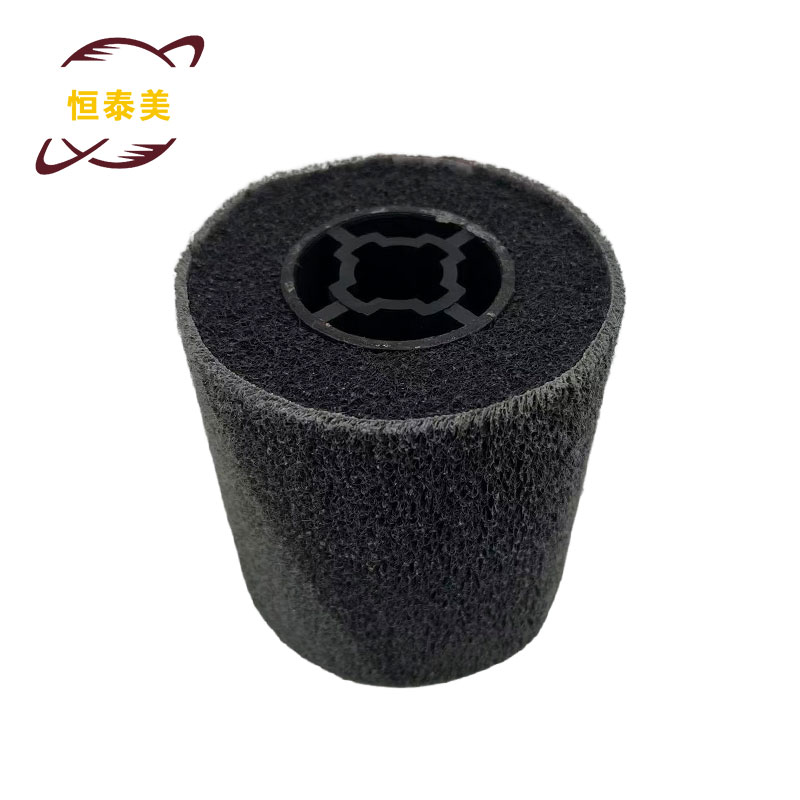
You must understand the structural anatomy of nylon belts to use them effectively. Traditional ceramic or zirconia belts feature a closed-coat design. Manufacturers glue abrasive grains directly onto a stiff cloth backing. These traditional belts grind aggressively. They rip away metal rapidly. Nylon belts work differently. They utilize an open-web, three-dimensional structure. Thick nylon fibers intertwine to form a sponge-like matrix. Manufacturers infuse abrasive grains throughout this web using strong synthetic resins.
This unique 3D structure provides a spring-like cushioning effect. The fibers compress when they contact the metal. This action prevents the abrasive grains from digging too deeply. Frame nylon as the correct choice for metal surface treatment. You should specify these belts when you need to blend linear scratch patterns. They excel at light edge deburring after laser cutting. They also clean surface oxidation efficiently without altering the base material.
However, we must establish hard limitations. Transparent assumptions build trust when evaluating alternatives. Nylon belts cannot perform heavy dimensioning. They cannot level large TIG welds. They will never alter structural geometry intentionally. If your workpiece requires aggressive stock removal, use a ceramic belt first. You then switch to a nylon belt for the final cosmetic finish. Misunderstanding this sequence wastes time and ruins expensive surface conditioning belts.
Selecting the right abrasive grain ensures optimal finishing performance. Metal substrates react differently to friction and heat. We must match the grain type to the specific metal.
Challenge: Stainless steel presents unique finishing hurdles. The metal work-hardens rapidly under intense heat. Heat also causes severe surface discoloration, known as heat tint. Standard abrasives generate too much friction. This friction destroys the protective chromium oxide layer.
Solution: We recommend specifying Medium to Fine grade Aluminum Oxide nylon belts. Aluminum oxide is blocky and tough. It withstands the high tensile strength of stainless steel. You should look for belts featuring a reinforced backing. This backing handles the required machine tension. More importantly, it achieves a consistent finish without excessive heat generation. Proper grain selection makes stainless steel finishing predictable and repeatable.
Challenge: Soft metals like aluminum, brass, and copper clog abrasives quickly. Operators call this phenomenon "loading." Friction melts the soft metal swarf. This swarf welds itself to the abrasive grains. Once a belt loads, it stops cutting entirely. It only generates heat and ruins the part.
Solution: You must utilize Coarse or Medium Silicon Carbide nylon webs. Silicon carbide is extremely sharp but brittle. The grains fracture continuously during use. This micro-fracturing exposes fresh, sharp cutting edges. The open 3D structure of the nylon web prevents loading. Swarf escapes easily through the gaps. This combination leaves a consistent, bright satin finish without smearing.
Challenge: Operators often struggle to remove thick surface contaminants. You need to strip heavy scale or corrosion without grinding away the healthy base metal. Traditional wire wheels are too slow. Grinding wheels remove too much structural material.
Solution: Specify Extra-Coarse Aluminum Oxide. The aggressive, stiff nylon web allows for rapid, safe cleaning. Aluminum oxide easily cuts through tough oxidation layers. This setup provides excellent rust removal. You strip away mill scale rapidly while maintaining the part's original dimensions and tolerances.
Abrasive Application Matrix
Workpiece Material | Primary Challenge | Recommended Grain | Recommended Grade |
|---|---|---|---|
Stainless Steel | Work-hardening, heat discoloration | Aluminum Oxide | Medium / Fine |
Aluminum alloys | Rapid belt loading, smearing | Silicon Carbide | Coarse / Medium |
Carbon Steel | Thick scale, preserving dimensions | Aluminum Oxide | Extra-Coarse |
Titanium | Combustibility, extreme toughness | Silicon Carbide | Medium |
The abrasive grain determines the cut, but the backing determines the contact. Nylon belts feature a woven fabric base called a scrim. Manufacturers bond the nylon web to this scrim. You must select the correct scrim flexibility based on your part's physical shape.
Evaluation Criteria: Flat panels and broad surfaces require rigid, low-stretch backings. A flexible belt on a flat surface causes problems. The belt tends to "cup" in the middle. It also rolls over the sharp edges of the sheet. This ruins the crisp, square geometry of the panel.
Outcome: A rigid scrim keeps the abrasive surface perfectly flat. It ensures a uniform linear scratch pattern across wide areas. This rigidity is critical for efficient metal sheet processing. Architectural panels and food-grade equipment rely heavily on this uniform aesthetic.
Evaluation Criteria: Tubular parts, handrails, and stamped components have complex curves. A rigid belt skips over low spots. It grinds aggressively into high spots. You require highly conformable, high-flex nylon webs for these applications.
Outcome: A flexible scrim allows the abrasive matrix to wrap around the part. It follows natural contours effortlessly. The belt reaches deep inside radii without flattening the curve. Using flexible belts for curved surface sanding prevents accidental gouging. It ensures a flawless finish on pipes, brackets, and ornamental ironwork.
Purchasing the right abrasive requires looking beyond the basic specifications. You must evaluate the hidden manufacturing qualities. These elements dictate how the belt performs on the shop floor.
Resin Quality & Smear Resistance: Nylon belts rely heavily on synthetic resins. These resins bind the abrasive grains to the nylon fibers. Cheap nylon belts use inferior bonding resins. These low-grade adhesives possess low heat thresholds. They melt under standard working friction. When the resin melts, it transfers sticky, stubborn residue directly onto your workpiece. Evaluate the heat threshold of the manufacturer's resin system before buying in bulk. High-quality resins resist smearing entirely.
Tensile Strength of the Backing: A broken belt halts production immediately. You must assess two mechanical features: the joint splice and the woven scrim strength. The splice is where the two ends of the belt meet. Look for reinforced tape joints that run smoothly over the drive wheel. Assess the scrim itself. High-quality belts resist stretching under industrial-level machine tension. They do not snap during aggressive lateral tracking adjustments.
Cost-per-Part vs. Unit Price: Frame your purchasing decision around practical longevity. Do not fixate on the cheapest initial belt cost. A cheap belt often wears out its edges prematurely. It may load with metal swarf in minutes. Evaluate edge wear resistance carefully. A premium belt with strong anti-loading properties finishes far more parts before requiring replacement. Evaluate vendor samples based on how many units they successfully process.
Common vendor evaluation steps include:
Requesting technical data sheets specifying resin heat thresholds.
Testing three different brands on your most difficult workpiece.
Measuring the exact runtime before the belt begins to shed fibers.
Checking the splice joint for chattering or bumping during rotation.
Inspecting the finished metal for any transferred adhesive residue.
Even the best nylon belt fails if operators use it incorrectly. Surface conditioning abrasives demand different machine settings than standard grinding belts. You must train your team to adjust their operational habits.
Controlling Belt Speed (SFPM): Speed kills nylon belts. Standard ceramic belts run fast to maximize stock removal. Nylon belts generally require 20% to 40% slower operating speeds. You measure this in Surface Feet Per Minute (SFPM). Running a nylon belt too fast generates extreme thermal friction. This friction damages the nylon matrix and melts the resin. Slower speeds allow the abrasive grains to cut the metal cleanly without overheating the substrate.
Pressure Management: Operator pressure causes the most frequent failures. You must educate operators on proper technique. "Letting the web do the work" is mandatory. When operators push too hard, they collapse the 3D nylon structure entirely. The fibers crush together. The abrasive grains bury themselves inside the flattened nylon. We call this instant glazing. Once glazed, the cut rate drops to zero. The belt just rubs the metal, causing severe heat damage. Apply only light to moderate pressure.
Coolant Compatibility: Heat management extends belt life. Briefly note whether your specific nylon belt series runs dry. Some advanced belts withstand flood coolants or misting systems. Liquid coolants flush away metal swarf continuously. This prevents loading completely. It also keeps the metal substrate cold. Coolant compatibility is essential for high-production automated finishing lines. Always verify with your abrasive supplier before introducing fluids, as water ruins standard dry-run resins.
Here is a quick checklist for operators:
Reduce machine RPMs before mounting the nylon belt.
Check the directional arrows on the inner backing before installation.
Apply the workpiece gently to the running belt.
Maintain consistent, sweeping motions to prevent heat buildup.
Inspect the belt periodically for swarf buildup or flattened fibers.
Selecting the right surface conditioning abrasive directly impacts your final product quality. You must match the abrasive grain to your specific metal type. Aluminum oxide tackles tough steels, while silicon carbide excels on soft, gummy alloys. Furthermore, always match the web flexibility to your part geometry. Rigid scrims keep flat panels pristine, whereas flexible webs hug complex curves perfectly.
Do not rush your procurement process. Your next step should be requesting sample belts from reliable manufacturers. Conduct real-world shop testing on your most difficult workpieces. Evaluate cut speed, smear resistance, and belt longevity. Once you confirm the results, engage technical sales for a detailed product specification catalog to streamline your bulk purchasing.
A: No. Nylon is for blending and finishing. Use a ceramic or zirconia belt to level the weld first, then switch to a nylon belt to blend the finish.
A: Typically caused by a combination of excessive RPMs and too much operator pressure. Reduce machine speed and apply lighter pressure to allow the abrasive grains to cut.
A: Aluminum oxide is tougher and longer-lasting, ideal for steel and rust removal. Silicon carbide is sharper but more brittle, making it superior for soft metals like aluminum and titanium where a bright finish is required.


