

Views: 167 Author: Site Editor Publish Time: 2026-08-07 Origin: Site


Surface preparation often forces operators to choose between two frustrating extremes. You either use aggressive abrasives like grinding wheels, which risk gouging base metals, or you rely on standard sandpaper. The latter clogs quickly when removing heavy coatings. This leads to frequent rework and high consumable turnover. This operational challenge costs shops countless hours in wasted labor and material replacement. Fortunately, a highly effective middle ground exists. The Nylon Sanding Disc, frequently called a surface conditioning disc, solves this exact problem. It features a non-woven, three-dimensional abrasive structure designed to strip away surface contaminants. Crucially, it achieves this without altering the underlying substrate's precise geometry. In this article, we take an objective look at how these specialized discs function. You will learn exactly where they outperform traditional abrasives in demanding environments. We will also guide you on how to specify the correct disc for your commercial or industrial applications.
Non-Woven Architecture: Features an open-web nylon structure embedded with abrasive grains, drastically reducing heat buildup and preventing material loading (clogging).
Substrate Preservation: Ideal for removing rust, paint, and oxidation without damaging underlying metal, aluminum, or rigid plastics.
Cost Efficiency: While higher in initial unit cost than standard sandpaper, the extended lifespan and reduced rework make them a high-ROI consumable for finishing workflows.
Application Specificity: Best reserved for surface preparation and blending, not for heavy stock removal or weld leveling.
Understanding how these tools function requires a close look at their unique construction. Traditional abrasives feature a flat sheet of paper or cloth coated in hard grains. They cut aggressively but lack flexibility. Non-woven abrasives take a completely different approach.
Manufacturers build these discs using a specialized blend of materials. They start with thick, synthetic nylon fibers. These fibers form a tangled, three-dimensional web. Thermosetting resins then bind abrasive grains directly to these flexible fibers. You will typically find aluminum oxide or silicon carbide used as the cutting agents. Aluminum oxide provides tough, durable performance for general metalworking. Silicon carbide offers a sharper, faster cut ideal for non-ferrous metals and finishing work. This combination of resin, nylon, and grain creates an incredibly resilient matrix.
The compressible nylon matrix acts as a built-in cushion during operation. We call this the spring effect. When you press the disc against a workpiece, the nylon fibers compress. This allows the abrasive material to conform closely to irregular surfaces, tight contours, and complex curves. Standard sandpaper simply bridges across low spots. A surface conditioning disc reaches into those valleys. More importantly, this spring effect prevents the hard grains from digging too deeply into the base metal. It cushions the cutting action, preventing accidental gouging.
Heat is the enemy of any metal finishing process. The open-web design excels at thermal management. The spaces between the tangled nylon fibers allow air to circulate freely. This airflow constantly cools the work surface. We consider this a critical evaluation dimension for any shop. Lower operating temperatures prevent soft metals from warping. They also stop paints and coatings from melting and smearing across the panel. Traditional abrasives trap heat against the surface, which causes rapid clogging. The open structure of a non-woven disc effectively eliminates this issue.
You need a consistent finish from start to finish. These discs provide exactly that through a self-sharpening mechanism. As you use the disc, the outermost nylon fibers gradually wear away. The resin bond breaks down under controlled friction. This ongoing breakdown continuously exposes fresh, sharp abrasive grit. You do not experience the sudden drop in performance common with standard sandpaper. The disc cuts smoothly and predictably until the very end of its usable life.
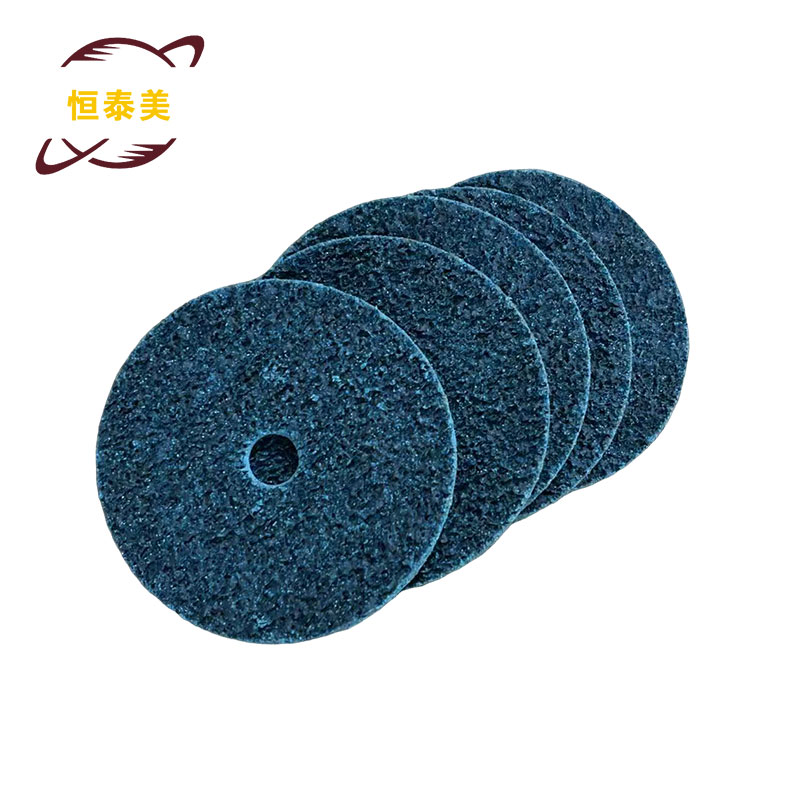
Shops across various industries rely on these tools daily. They offer unmatched versatility for surface preparation. Let us explore the most common applications where these discs excel.
Automotive restorers and structural steel fabricators face a common hurdle. They must strip heavy paint, thick rust, and stubborn scale. Harsh grinding wheels will remove the rust, but they thin the base metal in the process. This compromises structural integrity. A non-woven abrasive tackles this job perfectly. It aggressive strips away the surface corrosion. However, it stops cutting once it reaches the hard, bare metal underneath. You preserve the original panel thickness while achieving a clean, ready-to-paint surface.
Welders know that surface preparation dictates weld quality. You must remove mill scale and oxidation before striking an arc. These discs provide an excellent pre-weld cleaning method. After the welding process, they serve another vital role. TIG welding stainless steel often leaves behind a blue or rainbow heat tint. Customers usually reject this discoloration. You can quickly blend away this heat tint using a medium-grade disc. It removes the oxidation without leaving deep scratches that would require heavy polishing later.
Architectural metalwork requires pristine, uniform finishes. Elevators, handrails, and decorative panels often feature a brushed or satin look. Achieving this finish manually is exceptionally difficult. Non-woven conditioning discs make surface blending easy. They apply a consistent, linear scratch pattern to the metal. You use them to blend out minor handling marks or tool scratches. They prepare the surface perfectly prior to final clear coating or industrial anodizing.
Mechanics rebuilding engines face high-stakes cleaning tasks. They must strip baked-on gasket material from cast aluminum engine blocks. Using a wire wheel or hard scraper often spells disaster. These aggressive tools easily gouge the soft aluminum. This destroys the strict flatness tolerances required for a proper engine seal. A fine-grade conditioning disc cleans the mating surfaces safely. It shears away the brittle gasket residue while leaving the precise aluminum geometry completely intact.
Choosing the right abrasive prevents expensive mistakes. Operators often confuse the roles of different grinding tools. We built this decision matrix to clarify when to deploy each option. A Nylon Sanding Disc serves a very different purpose than a heavy-duty wheel.
Abrasive Type | Primary Purpose | Value Proposition | Main Drawback |
|---|---|---|---|
Grinding Wheels (Heavy Duty) | Aggressive stock removal and heavy weld leveling. | Removes massive amounts of metal extremely quickly. Ideal for thick structural steel. | High risk of gouging. Leaves a very rough finish requiring multiple secondary steps. |
Flap Discs (Intermediate) | Simultaneous shaping and moderate finishing. | Combines grinding and blending into one step. Highly versatile for general fabrication. | Can still dig into soft substrates if operated poorly. Clogs faster on gummy coatings. |
Nylon Sanding Discs (Finishing & Prep) | Surface conditioning, precise deburring, and cleaning. | Preserves the base material's dimensional integrity. Eliminates the risk of over-grinding. | Not suitable for heavy metal removal or shaping out-of-square edges. |
You use a grinding wheel when you need to completely reshape a metal part. If you have a massive weld bead to flatten, the grinding wheel is your best choice. However, you must accept that it leaves deep, harsh scratches.
Flap discs offer an intermediate step. They consist of overlapping flaps of sandpaper. They remove metal slower than a hard wheel but leave a smoother finish. Unfortunately, inexperienced users can still damage soft panels with them. They also tend to load up quickly when working with sticky adhesives.
Non-woven surface conditioning discs own the final prep stage. They entirely eliminate the risk of over-grinding. You use them when the shape of the part is already correct, but the surface condition is flawed. They represent the safest, most effective way to clean and condition a workpiece.
Not all conditioning discs fit every tool. You must evaluate several critical factors before making a purchase. Understanding attachment systems and abrasive grading will streamline your operations.
Your choice of disc depends heavily on the power tool you intend to use. Different tools require different mounting mechanisms.
Type R / Roloc (Quick-Change): These dominate the automotive and spot-repair industries. They feature a small, threaded plastic button on the back. You simply twist them onto a matching rubber mandrel attached to a pneumatic die grinder. They allow for incredibly rapid swapping between different grit grades. This keeps high-turnover workflows moving efficiently.
Hook and Loop / PSA: You will use these primarily on dual-action (DA) orbital sanders. Hook and loop acts like industrial Velcro. PSA stands for pressure-sensitive adhesive. Both styles excel when you need to cover larger, flatter surface areas evenly without aggressive digging.
Arbor Hole: Manufacturers design these specifically for larger right-angle grinders. A standard 4.5-inch Nylon Sanding Disc usually features a 7/8-inch center arbor hole. You must use a firm, specific backing pad to provide structural support for the flexible nylon web. Never run an arbor hole disc without its required backing pad.
You must understand that nylon discs use broad "grades" rather than strict grit numbers. The flexible nature of the web makes an exact grit measurement impossible. Instead, the industry uses a standardized color-coding system to indicate aggressiveness.
Coarse (Typically Brown or Tan): This grade performs roughly equivalently to a 50-80 grit sandpaper. You should choose the brown disc for heavy rust removal. It also easily strips thick, multi-layered paint from metal surfaces. It leaves a visible scratch pattern that requires further refinement.
Medium (Typically Maroon): This serves as the universal shop standard. It performs similarly to 100-150 grit abrasives. You will use maroon discs for general scuffing, surface blending, and moderate oxidation removal. They provide an excellent key for new primers and heavy coatings to adhere to.
Fine / Very Fine (Typically Blue or Grey): These match the performance of 220-320+ grit abrasives. You rely on them for final cosmetic finishing. They clean delicate surfaces without scratching. They excel at light defuzzing and preparing surfaces for very thin finishing coats.
Even the best tools fail when used incorrectly. Implementing non-woven abrasives requires a slight shift in operator technique. Pay close attention to these operational best practices to maximize lifespan and prevent damage.
We must address the most common failure point immediately. You must respect RPM limitations. Angle grinders spin incredibly fast, often exceeding 11,000 RPM. Many non-woven discs are rated for significantly lower speeds. Running a nylon disc at excessive speeds creates massive friction. This friction melts the synthetic nylon fibers. Once the fibers melt, they transfer a sticky synthetic residue directly onto your workpiece. Always check the maximum RPM rating on the disc and match it to a variable speed tool if necessary.
Operators accustomed to hard grinding wheels often apply too much force. You must instruct your team to "let the abrasive do the work." Excessive downward pressure compresses the springy matrix too tightly. This completely closes the open-web structure. When the web closes, the cooling airflow stops. Heat spikes immediately. Pushing harder does not speed up the cut. It simply accelerates disc wear and destroys the cooling effect.
Shops working with multiple metals face cross-contamination risks. You must warn operators against sharing discs between different materials. Imagine using a conditioning disc to clean rusty carbon steel. Microscopic ferrous particles embed themselves deep within the nylon web. If an operator then uses that exact same disc on a pristine stainless steel or aluminum panel, disaster strikes. They will embed those rusty steel particles into the clean metal. This causes secondary galvanic corrosion, ruining the workpiece weeks later. Always dedicate specific discs to specific metals.
Nylon surface conditioning discs offer tremendous strategic value for modern fabrication and repair shops. They serve as a specialized, low-risk consumable designed specifically to safeguard the workpiece while aggressively stripping away surface defects. By bridging the gap between heavy grinding wheels and fragile sandpaper, they streamline prep work and prevent costly base-metal damage.
Your next step should involve a brief shop audit. Observe your current abrasive consumption patterns. Are your operators spending excessive time repairing deep gouges left by hard grinding wheels? Are they constantly throwing away traditional sandpaper because it clogged on gummy paint? If so, we highly recommend transitioning to a pilot test of quick-change nylon conditioning discs. Train your team on proper RPM limits and light pressure techniques. You will quickly see a measurable improvement in both surface quality and overall workflow efficiency.
A: Yes, they are highly effective for defuzzing wood grain or deburring rigid plastics. The flexible web conforms to carved wooden shapes perfectly. However, you must keep the tool RPM exceptionally low. High speeds will easily burn wood and quickly melt plastic substrates.
A: Lifespan depends heavily on edge-wear and operator pressure. If used flat with light pressure, they generally outlast traditional coated sandpaper by a factor of 3 to 5 in heavy paint removal scenarios. Sharp edges on the workpiece will tear the nylon and reduce lifespan.
A: It depends entirely on the mounting type. Quick-change Type R discs require a compatible rubber mandrel for your die grinder. Standard 4.5-inch arbor hole discs designed for angle grinders absolutely require a firm backing pad to support the flexible nylon web during operation.


