

Views: 127 Author: Site Editor Publish Time: 2026-08-23 Origin: Site


Many fabricators make a costly operational mistake on the shop floor every single day. They treat different abrasive tools as completely interchangeable accessories. This simple oversight often causes severe downstream manufacturing problems. Using an aggressive flap disc on a high-tolerance workpiece can easily gouge the base metal irreparably. This mistake ruins hours of costly precision labor. Conversely, pressing a non-woven pad into heavy weld seams will burn up the synthetic fibers almost instantly. These aggressive mismatches destroy expensive components and waste valuable consumable budgets quickly. This comprehensive guide provides a strict, application-based evaluation framework for procurement and fabrication teams. You will learn exactly how to choose the right abrasive tool based on precise finish requirements and labor time. By understanding these distinct mechanical differences, you can successfully prevent costly rework and improve your overall manufacturing efficiency today.
Flap discs are aggressive cutting tools engineered for stock removal, weld blending, and edge chamfering.
A nylon sanding disc is a surface conditioning tool designed to clean, polish, and blend without altering the base material's geometry.
For optimal fabrication efficiency, combining both allows for flexible switching in multi-step finishing processes.
Selecting the wrong disc leads to increased rework rates, premature abrasive wear, or compromised structural integrity via over-grinding.
You must frame your tooling decision around specific project success criteria. Ask yourself a simple question before starting a new fabrication stage. Is your goal to change the shape of the base metal? Or do you merely need to prepare its outer surface? Understanding this fundamental distinction prevents catastrophic manufacturing errors.
The flap disc excels in high Material Removal Rate scenarios. We often refer to this metric as MRR in industrial engineering. It acts as an incredibly aggressive multi-tool. It bridges the gap between heavy grinding wheels and initial sanding steps. It removes base material rapidly and continuously. This makes it ideal for leveling heavy structural welds. You can also use it for beveling thick steel plates prior to welding. It physically alters the geometry of the workpiece.
Conversely, non-woven tools prioritize finish consistency over aggressive material removal. The internal web structure acts like a shock-absorbing cushion. It conforms perfectly to highly irregular surfaces. It cleans and conditions without cutting deeply into the metal. Your workpiece retains its exact original dimensions. Operators can achieve a beautiful brushed aesthetic effortlessly. This precise surface conditioning mandate forms the backbone of modern finishing processes.
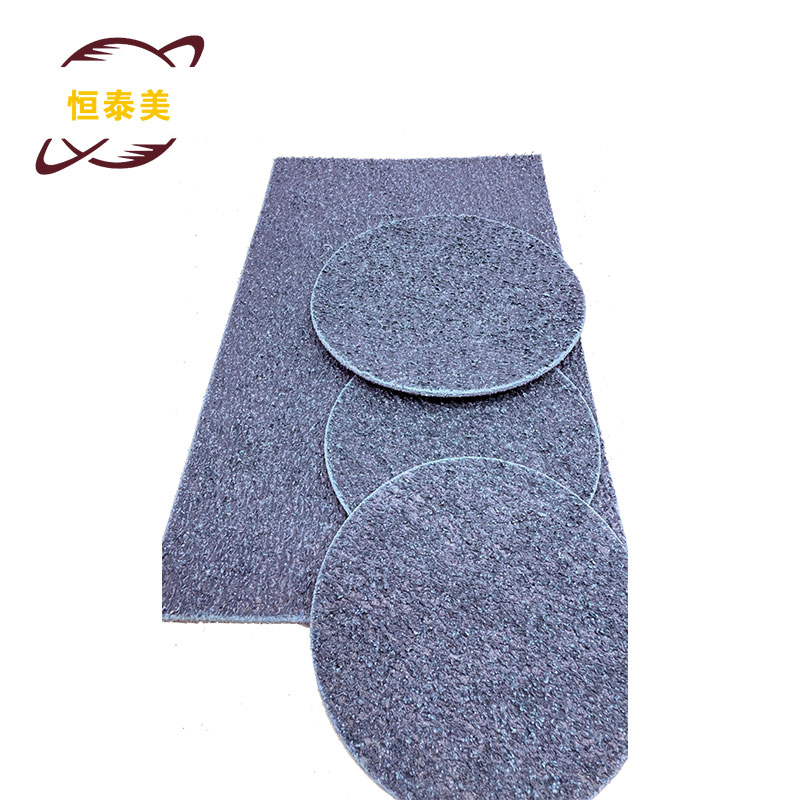
The mechanics behind these tools rely on advanced open-web technology. Manufacturers embed premium abrasive grains into non-woven synthetic fibers. They bind these components together using durable resin adhesives. This process creates a highly adaptable three-dimensional abrasive matrix. As the outer layer degrades, it exposes fresh grain beneath.
Operators experience several key operational advantages immediately. First, they are exceptionally Easy to use. The compliant structural design is highly forgiving for manual applications. It conforms gracefully to complex contours and tight corners. You rarely have to worry about accidentally flat-spotting the metal. The tool absorbs excess operator pressure safely.
Second, they offer a remarkably Long service life. The open web naturally resists frustrating loading or clogging issues. You can strip thick marine paint or heavy oxidation efficiently. They perform brilliantly on soft materials like raw aluminum. The accumulated debris easily escapes through the porous nylon mesh. This prevents the abrasive face from glazing over.
Heat management represents another massive industrial benefit. A premium Nylon Sanding Disc generates significantly less friction during operation. It prevents nasty thermal discoloration on heat-sensitive alloys. You can work confidently on stainless steel enclosures and titanium aerospace parts. The airflow through the web keeps the cutting zone cool.
However, implementation carries specific mechanical risks. You must monitor your grinder tool speed carefully at all times. Running them at excessively high RPMs creates disastrous friction levels. The intense localized heat will literally melt the synthetic fibers. This thermal failure destroys the abrasive tool instantly. It can also smear melted plastic across your pristine workpiece. Always adhere to the recommended operating speeds listed on the packaging.
The mechanical design relies on hundreds of overlapping coated abrasive flaps. Manufacturers glue these flaps firmly to a rigid backing plate. These flaps typically feature aggressive Zirconia or advanced Ceramic grains. As the outer grain layers dull and fracture, the cloth backing wears away. They constantly expose fresh, razor-sharp abrasive grain underneath.
This self-sharpening design delivers immense heavy-duty stock removal capabilities. You can bevel thick structural steel plates quickly. You can grind away heavy MIG weld splatter effortlessly. They boast incredibly high pressure tolerance under extreme industrial conditions. You can push them hard at maximum cutting speeds safely.
Fabricators can also choose different geometric profiles for specific jobs. A Type 27 flat profile works beautifully for smooth blending on flat planes. It provides a wide contact area for seamless transitions. A Type 29 angled profile provides an incredibly aggressive bite. The built-in angle naturally forces the abrasive into the material. This guarantees rapid reduction on severe weld seams.
Despite these tremendous strengths, operators face serious implementation risks. You risk severe undercutting if you lose focus for even a second. Gouging the base metal ruins expensive fabricated assemblies. Rapid heat buildup is another severe danger during prolonged grinding. You can easily warp thin sheet metal panels irreparably. The aggressive bite simply generates too much thermal energy for delicate substrates.
Comparing these two distinct abrasive categories side-by-side reveals their ideal use cases. You cannot swap them indiscriminately without sacrificing quality or efficiency. We evaluate them across four critical industrial benchmarks.
Overall Material Removal Rate (MRR).
Final Surface Finish Quality.
Manual Operator Skill Requirement.
Component Efficiency and Cost Return.
Let us summarize these crucial attributes in a clear comparison matrix.
Evaluation Criteria | Overlapping Flap Technology | Non-Woven Synthetic Technology |
|---|---|---|
Material Removal Rate (MRR) | Exceptionally high reduction capability | Near-zero structural reduction |
Surface Finish Quality | Leaves distinct directional scratch patterns requiring secondary refinement | Leaves a perfectly consistent, paint-ready or polish-ready finish |
Operator Skill Requirement | Requires strict, disciplined angle control to avoid deep divots | Highly compliant, forgiving, and incredibly user-friendly |
Primary Cost ROI | Delivers maximum value for heavy structural stock removal tasks | Provides superior longevity on delicate surface prep and cleaning tasks |
When reviewing the evaluation data above, you must match the tool precisely to the task. Heavy stock removal absolutely demands rigid overlapping flaps. If you use a softer abrasive for heavy grinding, it will disintegrate rapidly. You will burn through your consumable budget pointlessly. Conversely, surface prep tasks require compliance to maintain critical substrate thickness. Proper selection directly influences your bottom-line profitability.
We can apply this theoretical knowledge directly to real-world fabrication scenarios. Review these common shop floor challenges to guide your daily procurement strategy. We highlight the optimal tooling choice for each specific environment.
Scenario A: Heavy Weld Seam Blending (MIG/Stick). Winner: Flap Disc. Structural welding often leaves massive, uneven beads. Use a premium Ceramic or Zirconia grain variant. It provides the necessary mechanical power for rapid structural reduction. You can level the seam flush with the parent metal quickly.
Scenario B: Rust, Paint, or Mill Scale Removal. Winner: The non-woven option. Restoring older metal parts requires a delicate touch. It strips the surface completely clean down to bare metal. It achieves this impressive feat without thinning the underlying substrate. You preserve the structural integrity of the component entirely.
Scenario C: TIG Weld Discoloration & Pre-Paint Prep. Winner: The non-woven option. TIG welding produces beautiful, precise joints. However, it often leaves a distinct rainbow heat tint. The synthetic web safely removes this heat tint from delicate joints. It also leaves an ideal microscopic anchor pattern for subsequent liquid coatings.
Scenario D: The Multi-Step Polish. Winner: Both tools working together in sequence. High-end architectural fabrication demands perfection. You should utilize Flexible switching via quick-change backing pads. Aggressively grind the bulky weld first. Then immediately condition the surrounding area with a softer abrasive pad. This hybrid approach guarantees pristine visual results in record time.
Following these scenario guidelines eliminates guesswork completely. Operators can proceed confidently knowing they possess the correct equipment.
Optimizing your abrasive inventory requires a highly disciplined, analytical approach. Stop letting operators grab whatever tool sits closest to their workbench. Focus intensely on these strategic next steps.
First, base all procurement decisions strictly on the specific fabrication stage. Categorize your consumables by their primary intended function. Second, stock aggressive overlapping variations primarily for structural modification and weld leveling. They are your heavy-duty workhorses. Third, reserve compliant surface conditioning options exclusively for aesthetic finishing and coating preparation.
Fourth, audit your current shop scrap rates caused by accidental over-grinding. You might discover massive hidden losses. Finally, introduce non-woven abrasives to operators handling thin-gauge or high-value materials. Applying these stringent rules will instantly elevate your shop floor productivity. You will preserve critical engineering tolerances and extend overall tool lifespan significantly.
A: It primarily removes micro-burrs, surface oxidation, and loose contaminants. It completely lacks the rigidity and aggressive grain structure needed for true stock removal. You cannot use it to alter the dimensional geometry of the base metal. It merely cleans the top layer while safely preserving the original underlying shape.
A: You risk severe, irreversible damage to the workpiece. The aggressive biting action generates rapid, intense heat buildup locally. This concentrated thermal energy easily causes thin metals to warp and distort. You also face a dramatically high risk of accidental burn-through and deep, unrepairable gouging.
A: Yes, you highly benefit from using a variable-speed angle grinder. Synthetic fibers possess a relatively low melting point compared to ceramic. Standard grinders spin at excessive, dangerous RPMs. You must dial down the operating speed to keep RPMs safely below the critical nylon melting threshold.


