

Views: 122 Author: Site Editor Publish Time: 2026-06-26 Origin: Site


Selecting the wrong abrasive wheel leads to altered part geometries, unacceptable surface finishes, and excessive consumable costs. You cannot afford to guess when dealing with tight tolerances. A Unitized Wheel is a compressed, non-woven abrasive tool engineered for precision deburring and blending. It achieves these tasks without sacrificing the base material. This tool seamlessly bridges the gap between aggressive material removal and fine surface conditioning.
This guide serves as a technical decision-making framework to help engineers and procurement managers. You will learn to decode wheel specifications, including density, mineral type, and abrasive grade. By understanding these variables, you can match them to exact application requirements. We will show you how to optimize finishes, extend tool life, and eliminate guesswork on the shop floor.
Density dictates conformability and wheel life: lower densities blend well, while higher densities offer aggressive deburring and edge retention.
Abrasive selection drives the cut mechanism: Aluminum Oxide (A) provides durability and aggressive cutting; Silicon Carbide (S) delivers sharper, cleaner finishes.
Optimal unitized wheel selection is a balancing act between desired finish, operating speed (RPM), and part tolerance preservation.
Standardizing shop inventory requires testing a targeted matrix of wheels rather than relying on a single "universal" abrasive.
Abrasive selection is rarely just a basic tooling choice. It acts as a critical variable in your cost-per-part metrics and overall quality control. When facilities use the wrong wheel, they experience hidden costs. These costs manifest as rework, operator fatigue, and inconsistent product quality. You must view wheel selection as an engineered process.
A successful implementation creates predictable outcomes. You know you have selected the right tool when you hit specific benchmarks. Successful integration features:
Consistent finishes: Every part exiting the cell matches the approved visual and measurable standards.
Zero part gouging: The wheel conforms to the workpiece without altering critical dimensions or creating flat spots.
Predictable wheel wear: Operators replace tools at scheduled intervals, avoiding sudden breakdown or mid-batch failures.
Many procurement teams fall into a common evaluation trap. They prioritize wheel longevity over conformability. Harder wheels naturally last longer, so they seem like a better value on paper. However, this approach often ruins parts. A wheel that is too dense will act like a grinding wheel. It removes the base material instead of just the burr. This dimensional change leads directly to scrapped components. Saving a few dollars on a durable wheel costs hundreds of dollars in ruined parts.
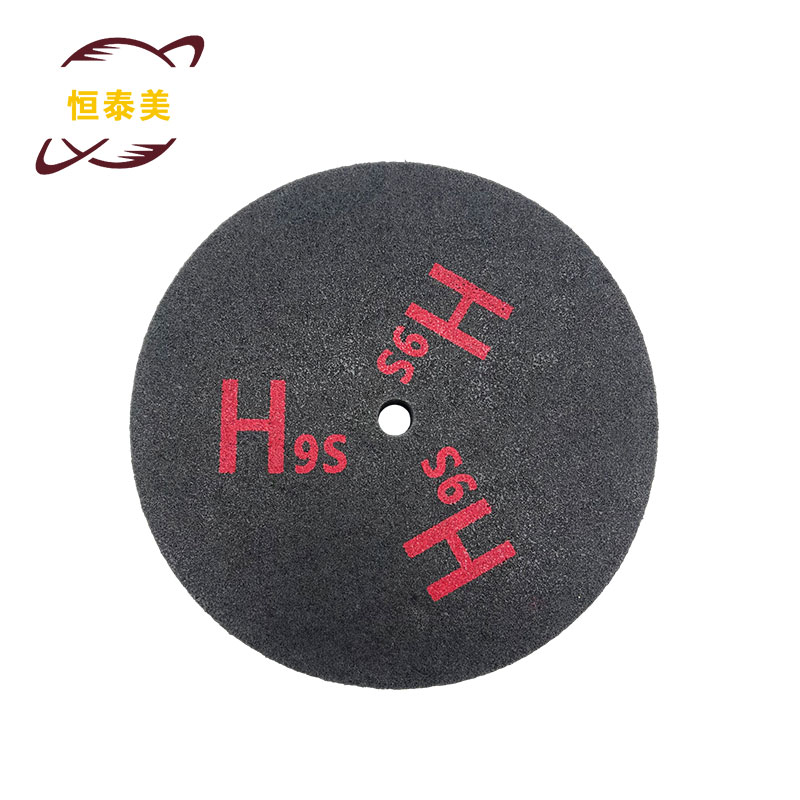
Manufacturers compress non-woven webs to create unitized tools. The density rating measures how tightly they pack this web. The standard industry numbering system typically ranges from 2 to 9. A lower number indicates a softer, more flexible structure. A higher number indicates a hard, rigid structure.
Low-density wheels prioritize flexibility. They offer high conformability for complex contours and fine finishing. Because they compress easily, they generate much less heat during operation. You should use softer tools when preserving part geometry is your top priority.
These softer options excel in specific scenarios. They are ideal for decorative finishing and blending light scratches. You will also find them highly effective when working on delicate components, such as medical implants or thin-walled aerospace tubes.
High-density wheels feature a very rigid structure. This rigidity provides excellent edge retention. They do not mushroom or deform when pressed against a sharp metal edge. They offer high durability and aggressive material removal.
You need hard densities for heavy-duty tasks. They are ideal for heavy edge deburring and radiusing. They also perform exceptionally well on harder alloys. If you process titanium, stainless steel, or Inconel, you will likely rely on these denser ratings.
Density Range | Hardness Profile | Key Characteristic | Primary Application |
|---|---|---|---|
2 - 3 | Soft | Maximum conformability | Light blending, decorative finishes |
4 - 5 | Medium-Soft | Balanced flexibility | General finishing, light deburring |
6 - 7 | Medium-Hard | Good edge retention | General purpose deburring |
8 - 9 | Hard | Maximum rigidity | Heavy deburring, hard alloys |
The nylon web and resin binder only hold the tool together. The abrasive mineral actually does the cutting. Understanding mineral types and grit sizes is essential for optimizing Non-Woven Abrasive Wheels.
Aluminum Oxide (A): This mineral features a blocky, durable structure. It breaks down slowly under pressure. Because of its toughness, Aluminum Oxide is best for aggressive cutting and heavy deburring. It serves as the standard choice for general-purpose metalworking on carbon steel and aluminum.
Silicon Carbide (S): This mineral has a sharp, friable nature. Friability means the grain fractures easily under pressure, constantly exposing fresh, sharp cutting edges. It cuts faster but wears quicker than Aluminum Oxide. Silicon Carbide is best for achieving bright, consistent finishes. It excels at blending and is the preferred mineral for titanium or non-ferrous metals.
Unitized tools use a simplified grading scale instead of exact grit numbers. The standard grades include Coarse (CRS), Medium (MED), Fine (FIN), and Very Fine (VFN).
Grade always interacts directly with mineral type. You must evaluate them together. For example, an "A MED" (Aluminum Oxide Medium) wheel behaves very differently than an "S FIN" (Silicon Carbide Fine) wheel. The "A MED" digs deeper, removes more burrs, and leaves a duller scratch pattern. The "S FIN" shears the surface lightly, removing micro-burrs and leaving a bright, polished scratch pattern.
Manufacturers combine density, mineral, and grade to create standard specifications. They build the nomenclature systematically. A "2S FIN" signifies a density 2, Silicon Carbide mineral, in a Fine grade. An "8A CRS" indicates a density 8, Aluminum Oxide mineral, in a Coarse grade. Decoding this language helps you select the right tool.
You can narrow down your choices based on your specific operational goals. Use these starting points for common applications:
For Light Blending & Finishing: Recommend starting with softer, fine-grade Silicon Carbide. A 2S FIN or 3S FIN conforms well and leaves a bright surface.
For General Purpose Deburring: Recommend medium density, medium-grade Aluminum Oxide. A 6A MED offers a strong balance of wheel life and edge deburring power.
For Heavy Edge Deburring: Recommend hard density, coarse Aluminum Oxide. An 8A CRS withstands sharp edges and quickly removes heavy machining burrs.
You should avoid stocking twenty different wheel specifications. Consolidate your tooling by identifying versatile options. Usually, 2 to 3 specifications can cover 80% of a facility's operations. A standard 6A MED and a 2S FIN combination handles most deburring and blending needs efficiently.
Application Goal | Recommended Specification | Expected Outcome |
|---|---|---|
Polishing & Light Blending | 2S FIN / 3S FIN | Bright finish, no dimension change |
Medium Burr Removal | 6A MED | Clean edge, moderate tool life |
Heavy Machining Burrs | 8A CRS | Fast removal, high edge retention |
Titanium Deburring | 6S MED / 8S FIN | Clean cut, low heat generation |
Even the perfect wheel will fail if you run it incorrectly. You must manage operating speeds and operator techniques to guarantee safety and performance.
You must strictly adhere to Maximum Operating Speed (MOS) limits. These limits are printed directly on the wheel or packaging. Running a unitized tool too slowly reduces its efficiency. At low speeds, the abrasive grains drag rather than cut. Conversely, running it too fast generates excessive heat. Exceeding the MOS also risks catastrophic wheel failure and operator injury.
Heat is the enemy of non-woven abrasives. The resin binder melts if the temperature climbs too high. This melting causes smearing. The melted resin transfers onto the workpiece, ruining the finish. On heat-sensitive alloys like titanium or stainless steel, excessive heat can cause metallurgical changes or discoloration. Always match your density and RPM combination to prevent this buildup.
Operators frequently face a steep learning curve. Many operators are used to bonded grinding wheels. They tend to push hard to remove material quickly. With non-woven tools, operators must let the wheel do the work. Applying excessive pressure does not increase the cut rate. Instead, it crushes the nylon web and leads to premature wheel breakdown.
You should always follow relevant safety standards for abrasive usage. Adhere to ANSI B7.1 safety requirements. Ensure you use the proper flanges, guards, and personal protective equipment during operation.
You cannot finalize a specification purely on paper. Theoretical matching only gets you close. You must execute a structured testing protocol to confirm the wheel performs exactly as expected in your specific manufacturing environment.
We recommend using a bracket testing framework. Start with a baseline recommendation based on your primary application. For instance, if you need general deburring, begin with a 6A MED. Next, test one step softer and finer (e.g., 4A FIN), and one step harder and coarser (e.g., 8A CRS). Running this bracket helps you find the optimal balance between cut rate and finish quality without endless trial and error.
You must evaluate your abrasive choices through a broader financial lens. Look beyond the initial purchase price of the consumable. A premium wheel might cost more upfront, but it pays for itself rapidly. Calculate your Return on Investment (ROI) by comparing the tool's cost against the labor time saved in secondary finishing processes. Furthermore, factor in the reduction in scrap rates. If a slightly softer wheel eliminates dimensional gouging, the savings in preserved parts will far outweigh the tooling costs.
Do not overhaul your entire inventory blindly. Guide your procurement team to request sample wheels from a qualified distributor. Set up a controlled run on a single machine or cell. Document the baseline metrics, including parts processed per wheel, average cycle time, and surface roughness (Ra) values. Once you validate the data, you can confidently proceed with a full-scale rollout across the facility.
Unitized tools are highly engineered systems. To achieve perfect surface conditioning, your chosen density, mineral, and grade must align precisely with the specific metalworking task. Guessing these parameters leads directly to wasted time and ruined components.
Remember that empirical testing on actual production parts remains the only verifiable way to finalize a specification. Paper recommendations provide a starting point, but shop-floor data proves the value.
Take action today to improve your finishing processes. Contact an abrasives specialist or application engineer to review your current finishing bottlenecks. Set up a trial using the bracket testing framework, and start standardizing your abrasive inventory for better, more consistent results.
A: The difference lies in the manufacturing method. A unitized wheel is made from layered non-woven webs compressed flat. This allows operators to use it in multiple directions. A convolute wheel is made by wrapping the web around a central core. It must run in a specific direction, indicated by an arrow, to prevent the layers from unravelling.
A: Yes. They can be easily dressed to match specific part profiles or complex contours. You can use standard abrasive dressing tools, like a diamond dresser or a dressing stick, to shape the edge exactly to your required geometry.
A: Yes, they do. Proper storage conditions are essential. You must avoid extreme humidity or severe temperature fluctuations. Poor storage degrades the integrity of the resin binder, leading to premature wheel failure or reduced cutting efficiency. Keep them in a clean, dry environment.
A: Smearing usually happens due to excessive heat buildup melting the resin binder. This is typically caused by applying excessive operator pressure, running the tool at an incorrect RPM, or using a wheel that is too dense and hard for the specific application.


